646-665-1915 Menu

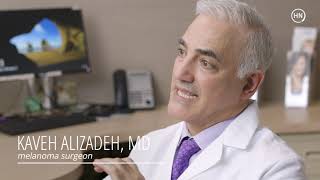
Skin cancer removal is one of the most commonly performed plastic surgery procedures in New York and worldwide. At Cosmoplastic Surgery in NYC and Long Island, board-certified plastic surgeon Dr. Kaveh Alizadeh has years of experience plus extensive training in specialized surgical techniques to eliminate cancerous cells and repair wounds to minimize any chance of scarring. Although he removes cancerous lesions from the entire body, Dr. Alizadeh specializes in removing skin cancers from the face, hands, and arms. He achieves excellent outcomes for patients who have been diagnosed with basal cell, squamous cell, or melanoma skin cancers, helping them eliminate their skin cancer—almost without a trace.

Dr. Alizadeh completed highly specialized training at Memorial Sloane Kettering Cancer Center, widely regarded as one of the best cancer centers in the world, and is currently a full Professor of Plastic Surgery at New York Medical College.

Schedule your consultation for skin cancer removal with Dr. Alizadeh today. Cosmoplastic Surgery has three convenient office locations in metropolitan New York: Long Island, Manhattan, and Westchester. Request your consultation online, or phone 212.348.0100 (Manhattan) / 516.439.5010 (Long Island).

Dr. Kaveh Alizadeh Removes Cancerous Skin Tumors on Long Island, NY, Patients

If you have a suspicious lesion that may be cancerous, your dermatologist or Dr. Alizadeh will likely recommend a biopsy, or surgical removal of the lesion, which is then sent to a laboratory and viewed under a microscope for an expert diagnosis. Many times the biopsy alone eliminates the tumor, but sometimes patients require additional surgery or treatment to completely remove all cancerous cells.

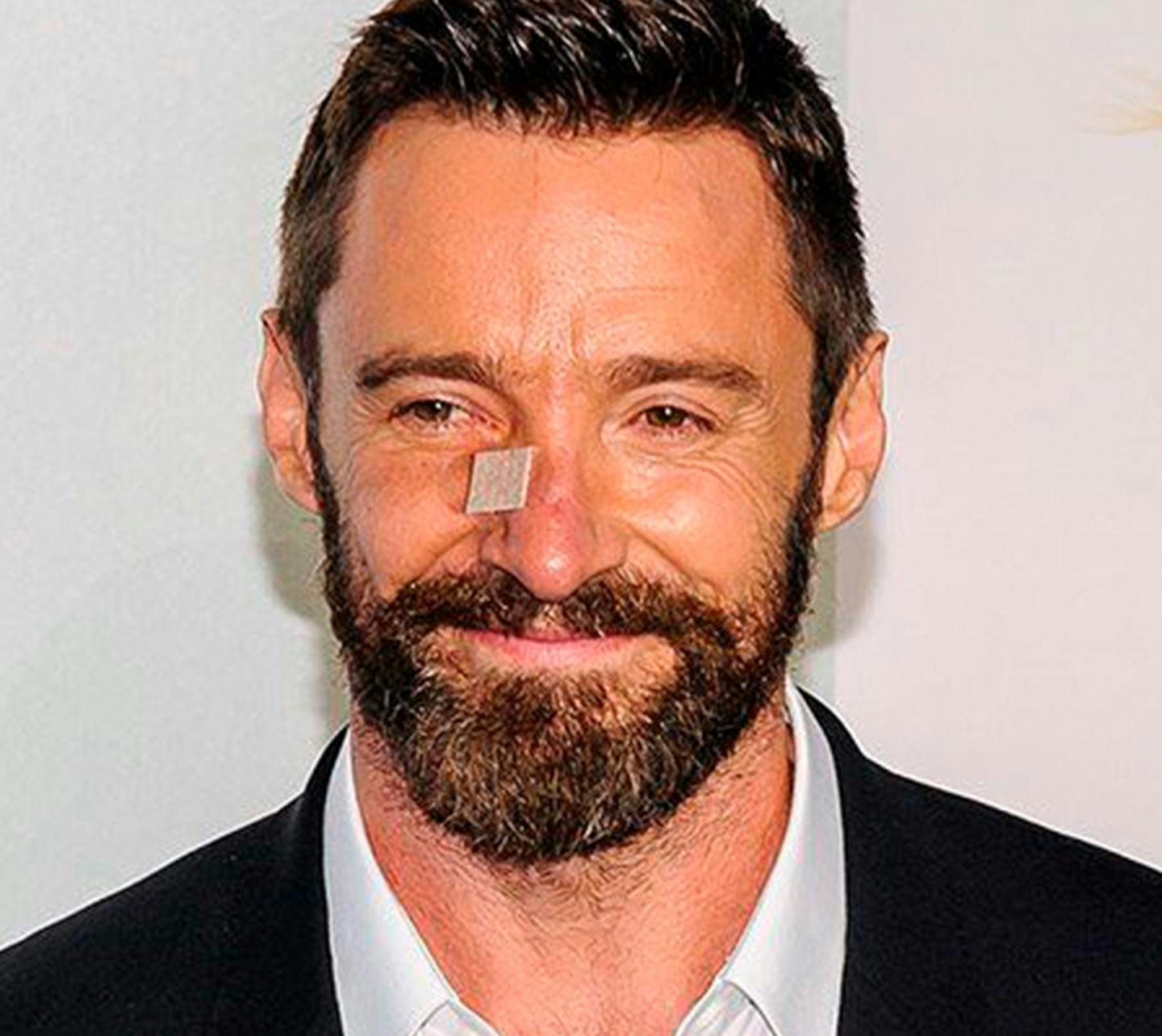
Photo of actor, Hugh Jackman, with a bandaid on his nose after being treated for skin cancer.

Dr. Alizadeh performs many types of biopsies, and he or your dermatologist will recommend one based on the suspected type of skin cancer. These may include a shave biopsy, which removes a thin layer of cells from the outermost portion of your skin; a punch biopsy, which removes deeper skin layers with a small, sharp tool; or an excisional biopsy, which removes with a surgical scalpel all layers of the tumor. Mohs Micrographic Surgery is a type of excisional biopsy that requires examining excised tissue under a microscope during surgery until all cancerous cells have been removed.

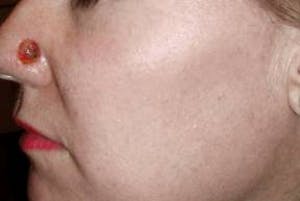
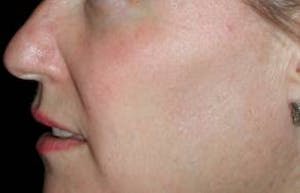
Before & After

View More

Flap Surgery

Flap surgery is a reconstructive plastic surgery technique whereby healthy tissue (skin, fat, and possibly muscle) from one area of the body is transplanted to another area that has been damaged by trauma, mastectomy, or skin cancer excision. The healthy tissue used for a flap wound closure may be sourced from another part of the body, known as a free flap, or from an area immediately adjacent to the injured tissue, known as a local flap. A local flap closure involves repositioning the adjacent tissue to cover the damaged area while keeping the blood vessels intact, a distinct advantage for healing. Blood vessels for a free flap closure must be surgically reconnected.

Skin Grafting and Bioengineered Skin Substitutes

Skin grafting, like free flap wound closure, involves transplanting healthy donor tissue from one part of the body to another that has been damaged by skin cancer removal. Skin grafting after skin cancer removal helps the area to heal faster, and it can improve the function and appearance of the traumatized area. Some partial-thickness skin grafts involve transplanting only the top layers of healthy tissue, while other full-thickness grafts require removing entire layers of skin.

Dr. Alizadeh may also recommend a bioengineered tissue substitute for patients who require a skin graft to cover a large area. An acellular dermal matrix can protect and cover the large wound, enabling the skin underneath to slowly grow back.

During your consultation for skin cancer removal, Dr. Alizadeh will explain in detail your options so that together you can choose the one that will give you the healthiest, most aesthetically pleasing outcomes. If scars from prior skin cancer removal bother you, Dr. Alizadeh also specializes in scar reduction. During your consultation, he will be happy to explain your options for making them appear less prominent.

Schedule your consultation at Cosmoplastic Surgery today: Request your appointment online, email our office, or phone 212.348.0100 (Manhattan) / 516.439.5010 (Long Island).

Skin Cancer Treatment FAQs

What is Mohs surgery and when is it used?

Mohs surgery is a precise technique where tissue is removed and examined layer by layer during the procedure. It is often used for facial areas or recurrent cancers to preserve as much healthy tissue as possible.

Will I have a noticeable scar after treatment?

Any surgical procedure leaves some degree of scarring, but techniques are chosen to minimize visibility. Many scars fade significantly over time and are placed along natural lines when possible.

How long does recovery take after skin cancer removal?

Recovery varies based on the size and complexity of the procedure. Smaller excisions may heal quickly, while reconstructive procedures may require a longer healing period.

Can skin cancer come back after treatment?

There is always a possibility of recurrence, which is why regular follow-up and skin checks are important. Early detection plays a key role in successful long-term outcomes.

When should I get a suspicious skin lesion checked?

Any new, changing, or unusual lesion should be evaluated promptly. Early diagnosis allows for simpler treatment and reduces the risk of the cancer spreading.

Will I need stitches after skin cancer removal?

Many procedures require sutures to close the wound, especially if a larger area is treated. In some cases, advanced closure techniques are used to support healing and improve the final appearance.

How long does it take to get biopsy or pathology results?

Results are typically available within several days to a week, depending on the testing required. Your care team will review the findings with you and discuss any next steps if needed.

Is skin cancer removal performed under local or general anesthesia?

Most skin cancer procedures are done with local anesthesia, especially for smaller or moderate areas. Larger or more complex cases may require additional sedation depending on the treatment plan.

Accessibility: If you are vision-impaired or have some other impairment covered by the Americans with Disabilities Act or a similar law, and you wish to discuss potential accommodations related to using this website, please contact our Accessibility Manager at 646-665-1915.
Contact Us

Contact Us

646-665-1915