646-665-1915 Menu

Surgical Precision Where Proportion Matters Most

Dr. Kaveh Alizadeh, MD, FACS, is a board-certified plastic surgeon, Professor of Clinical Surgery at New York Medical College, and the former Chief of Plastic and Reconstructive Surgery at Westchester Medical Center. Awarded Top Doctor 19 years in a row and recognized by Castle Connolly and U.S. News & World Report, Dr. Alizadeh is among the most decorated plastic surgeons in the New York region, with a practice built on outcomes that patients and their families trust. Contact Cosmoplastic Surgery to schedule a consultation at our Long Island or NYC office. 

What Is Otoplasty?

Otoplasty, commonly called ear pinning, is a surgical procedure that reshapes or repositions the ears to improve their proportion and relationship to the face. It is most often performed to correct ears that protrude significantly from the head, though it can also address ears that are asymmetrical, unusually large, or structurally irregular due to genetics or prior injury. The procedure reshapes the cartilage that gives the ear its shape. Depending on the degree of correction needed, Dr. Alizadeh may score, fold, or remove cartilage to achieve a more natural contour and bring the ears closer to the head. Incisions are placed behind the ear to keep any scarring out of sight. The result is ears that sit in a more balanced position relative to the rest of the face, without an operated or pinched appearance.

Benefits of Otoplasty

  • Reduces the prominence of ears that protrude from the head
  • Corrects asymmetry between the two ears
  • Produces natural-looking results with no visible scarring
  • Appropriate for both children and adults
  • Long-lasting correction with a single procedure
  • Results in greater confidence with hairstyles, hats, and everyday appearance

Am I a Good Candidate for Otoplasty?

Adults can undergo the procedure at any point. Good candidates are in overall good health and are bothered by protruding, asymmetric, or irregularly shaped ears. Children are generally eligible for otoplasty once ear growth is nearly complete, typically around age five or six. At this stage, the cartilage is still pliable enough to reshape effectively while being mature enough to hold the correction long-term. Realistic expectations about what surgery can achieve are essential. A consultation with Dr. Alizadeh is the best way to confirm candidacy and determine the right approach.

Why Choose Dr. Alizadeh for Otoplasty?

The ear is a structurally complex part of the face, and the margin between a natural outcome and an over-corrected one is narrow. Dr. Alizadeh's background in both cosmetic and reconstructive surgery gives him a precise understanding of ear anatomy and the nuance required to reshape cartilage without erasing the natural contours that make the result look authentic. At Cosmoplastic Surgery, every procedure reflects the same commitment to proportion, balance, and outcomes that serve the whole face.

Dr. Alizadeh, Board-Certified NYC Plastic Surgeon
Dr. Kaveh Alizadeh

Otoplasty Before & After Photos

View More

Your Consultation

During your consultation, Dr. Alizadeh will examine your ears, assess the cartilage, and discuss your goals and concerns. For younger patients, parents are encouraged to be part of the conversation. If you are considering other facial procedures alongside otoplasty, Dr. Alizadeh can discuss how they might be sequenced or combined. You'll leave with a clear plan and a realistic picture of what to expect.

Dr. Kaveh Alizadeh

How Much Does Ear Surgery Cost?

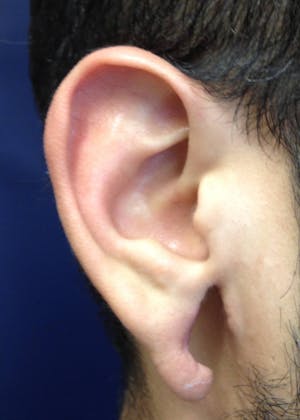
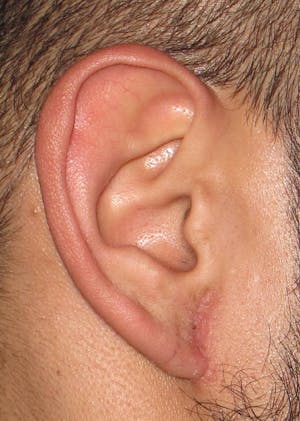
Earlobe repair or reconstruction at Cosmoplastic Surgery starts at $1,500. The final cost depends on the extent of the repair, whether one or both earlobes are treated, and the technique required to restore a natural appearance. Schedule a consultation to discuss your goals and receive a personalized quote.

What to Expect During Otoplasty

Preparing for Surgery

Dr. Alizadeh will provide specific pre-operative instructions at your consultation, including medications to avoid and guidelines around eating and drinking before the procedure. Otoplasty is performed under general anesthesia for younger patients and local anesthesia with sedation for most adults. Patients should arrange for someone to drive them home afterward.

The Procedure

Dr. Alizadeh places the incisions behind the ear, within the natural crease where the ear meets the head. Through this access point, he reshapes and repositions the cartilage using techniques selected for each patient's anatomy and goals. Sutures hold the cartilage in its new position. The procedure typically takes one to two hours depending on the extent of correction required.

Immediately After Surgery

A soft dressing or headband is applied to protect the ears and support their new position during early healing. Mild discomfort, swelling, and temporary numbness are common in the first few days and are manageable from the outset.

Otoplasty Recovery

Most adult patients return to light activity within a week. Children typically resume school within seven to ten days, provided contact sports and rough play are avoided. A protective headband is usually worn for several weeks, including during sleep, to guard the ears while the cartilage settles into position.

Direct pressure on the ears should be avoided during this period, including sleeping on either side. Most patients are cleared for full activity, including exercise and sports, within four to six weeks.

Otoplasty Results

Otoplasty produces stable, long-lasting results. Once the cartilage has healed in its repositioned state, the correction holds. The ears sit naturally against the head, balanced with the rest of the face. Most patients and parents find the change meaningful but understated: the ears stop drawing attention, which is the goal.

Related Procedures at Cosmoplastic Surgery

FAQs

Will otoplasty leave visible scars?

Incisions are placed in the crease behind the ear, where they are hidden from view. Scarring is minimal and, for most patients, undetectable once healed.

Does ear pinning affect hearing?

No. Otoplasty addresses the external ear only and has no effect on hearing.

Is the procedure performed under general or local anesthesia?

Younger patients typically receive general anesthesia. Most adults undergo the procedure under local anesthesia with sedation.

How long does otoplasty take?

The procedure generally takes one to two hours, depending on the degree of correction needed and whether one or both ears are being treated.

Can otoplasty correct asymmetry between the two ears?

Yes. Differences in size, shape, or position between the ears can often be improved significantly, though perfect symmetry is not always achievable given natural variation in cartilage structure.

Is there a window of time after which otoplasty is no longer effective?

No. While childhood is often an ideal time to address protruding ears, the procedure is equally effective in adults. There is no age beyond which otoplasty stops working, and many adults who did not have the procedure as children achieve excellent results.

Can otoplasty be performed on one ear only?

Yes. When only one ear protrudes or differs significantly in shape or position, surgery can be performed on that side alone. In some cases, Dr. Alizadeh may recommend minor adjustments to both ears to achieve the best overall symmetry, which is discussed during consultation.

Ready to Reshape Your Ears?

Proportion is one of the quieter elements of a balanced face. When the ears draw the wrong kind of attention, correcting them can shift how a person feels about their appearance well beyond the ears themselves. At Cosmoplastic Surgery, Dr. Alizadeh approaches every otoplasty with the precision and care that define his practice. Contact our Long Island or NYC office to schedule your consultation today.

Accessibility: If you are vision-impaired or have some other impairment covered by the Americans with Disabilities Act or a similar law, and you wish to discuss potential accommodations related to using this website, please contact our Accessibility Manager at 646-665-1915.
Contact Us

Contact Us

646-665-1915