

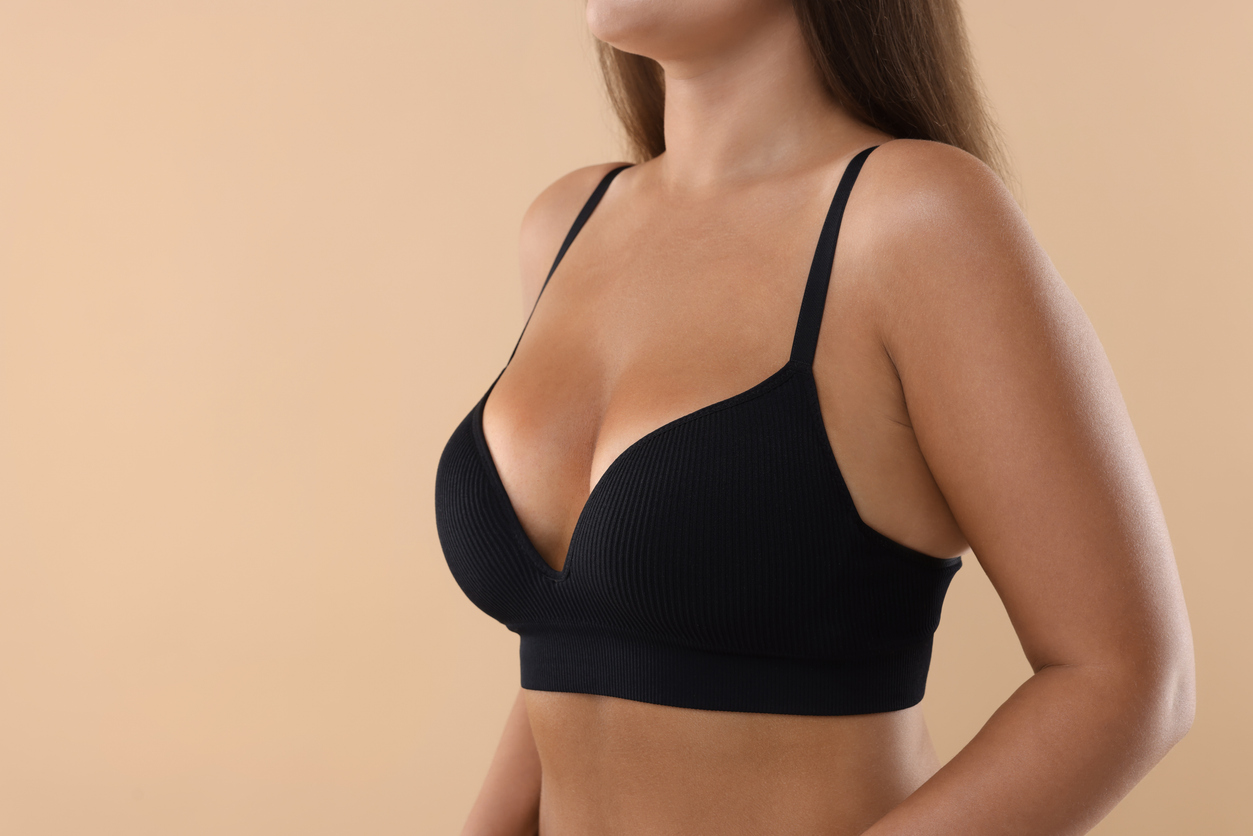
Pregnancy and major weight loss are two of the most common reasons patients pursue a breast lift, since both can create changes to breast shape and position that diet, exercise, and time alone will not reverse. A breast lift, also called a mastopexy, repositions breast tissue and the nipple to restore a firmer, more balanced contour once weight has stabilized. Dr. Kaveh Alizadeh, a board-certified plastic surgeon treating patients in Manhattan and Long Island, has performed more than 1,000 breast procedures over the course of his career and developed the NaturaBra® technique to address the sagging and volume loss that follow pregnancy, breastfeeding, and significant weight change.
Demand for this kind of restoration has grown in recent years. According to the American Society of Plastic Surgeons' 2023 Procedural Statistics Report, breast lift procedures increased 7% that year, with post-pregnancy body restoration counted among the leading drivers of that growth. This blog explains how pregnancy and weight loss affect the breasts differently, what makes someone a strong candidate for a lift, and what to expect at a consultation with Dr. Alizadeh.
How Pregnancy and Breastfeeding Change Your Breasts
Pregnancy floods the body with estrogen and progesterone, hormones that cause the milk-producing glands inside the breast to expand well beyond their pre-pregnancy size. That rapid growth stretches the skin and the internal ligaments that normally hold breast tissue in place, and stretched tissue does not always return to its original tension once the reason for stretching is gone.
Once breastfeeding ends, the glandular tissue that filled the breasts during nursing shrinks back down. The skin and ligaments, however, do not shrink at the same pace. Loose skin is often left wrapped around a smaller volume of breast tissue underneath.
This mismatch produces three changes patients tend to notice: elongation of the breast, downward descent of the nipple and areola, and a loss of fullness in the upper pole, or the area above the nipple.
How Major Weight Loss Changes Breast Shape and Position
Breast tissue is made up largely of fat, so significant weight loss, whether from diet, exercise, or bariatric surgery, often causes noticeable deflation. As fat cells shrink, the skin that once covered a fuller breast is left with less volume underneath to support it.
Skin that has been stretched over months or years at a higher weight rarely snaps back once that volume disappears. That gap between skin and underlying tissue is what causes ptosis, or sagging, to worsen after major weight loss, sometimes more dramatically than after pregnancy alone.
Patients who have had bariatric surgery raise this concern often, since rapid, large-scale fat loss tends to produce more pronounced sagging than gradual weight loss over years. This differs from pregnancy-related change, which stems from hormonal shifts and milk production rather than fat loss, though the two causes can overlap in patients who gained weight during pregnancy and later lost it.
Signs You Are a Good Candidate for a Post-Pregnancy or Post-Weight-Loss Breast Lift
Several signs point toward good candidacy for a breast lift after pregnancy or weight loss:
- Nipples that sit at or below the inframammary fold, the crease underneath the breast
- Breasts that appear stretched, elongated, or flattened rather than rounded
- Noticeable loss of fullness in the upper pole of the breast
- A stable weight maintained for at least six months
- Childbearing that is complete, or no plans for additional pregnancies in the near future
- Non-smoking status, or a willingness to quit at least four weeks before surgery
Weight stability deserves particular attention because breast volume shifts directly with body fat. Gaining or losing a significant amount of weight after a lift can stretch the skin again or leave it without enough tissue underneath to fill it, which can undermine results that took months to fully heal. That is why surgeons generally ask patients to hold a stable weight for at least six months before scheduling surgery. That window allows the body to settle into its post-pregnancy or post-weight-loss shape.
Should You Wait Until After Your Last Pregnancy?
Plastic surgeons recommend waiting until childbearing is complete before scheduling a breast lift. Pregnancy triggers the same hormonal expansion and skin stretching described earlier, and a later pregnancy can undo some or all of a lift's results.
This does not mean patients who hope for more children in the future have no options. Some choose to proceed anyway, understanding that a later pregnancy may call for a revision down the road, while others prefer to wait for a longer-lasting outcome. Either choice tends to leave patients satisfied: a systematic review covering 510 patients across multiple peer-reviewed studies found mastopexy satisfaction rates ranging from 76% to 95%, regardless of when in a patient's life the surgery took place.
Longevity factors into this decision too. The American Society of Plastic Surgeons notes that breast lift results can last many years when weight stays stable, which is one reason surgeons favor waiting until childbearing ends. Patients who are finished having children can move forward now and enjoy that long-term outcome without wondering how a future pregnancy might change it.
Breast Lift vs. Mommy Makeover After Pregnancy: What's the Difference?
A standalone breast lift addresses only the breasts, repositioning tissue and the nipple-areolar complex to correct sagging. A mommy makeover combines a breast lift, often paired with augmentation for added volume, with a tummy tuck and sometimes liposuction to address several areas that pregnancy changes at once.
That kind of standalone procedure tends to be enough for patients whose main concern is breast shape and position, with little change to the abdomen or waistline. A full mommy makeover suits patients dealing with loose abdominal skin, separated abdominal muscles, or stubborn fat deposits in addition to breast sagging.
Dr. Alizadeh's Mommy Makeover combines these procedures to restore the breasts, abdomen, and body contour that pregnancy and childbirth can change all at once. Patients weighing a combined approach against a standalone breast lift can review that page before their consultation.
What to Expect at Your Consultation With Dr. Alizadeh
Every consultation with Dr. Alizadeh starts with a physical exam to determine the grade of ptosis, ranging from mild sagging to more advanced descent below the fold, since this grade shapes the surgical plan. He also evaluates skin elasticity and quality, which affects how the breast heals and how well it holds its new shape over time.
Much of the conversation centers on whether the NaturaBra® technique fits the patient's anatomy and goals, since its internal support structure is built from the patient's own tissue rather than synthetic mesh. Dr. Alizadeh also discusses volume goals, including whether implants or fat transfer should be added if a patient wants more fullness than a lift alone can provide, and he offers a timing recommendation for anyone still weighing a future pregnancy against moving forward now.
Recovery is part of the conversation as well. Most breast lift patients return to light activity within a week and resume full exercise between four and six weeks after surgery. That timeline gives patients a realistic sense of what recovery will require. Consultations take place at Dr. Alizadeh's Manhattan and Long Island offices, where patients can schedule an appointment and take the next step toward a breast lift after pregnancy or major weight loss.
Restore Your Shape With Dr. Alizadeh in NYC and Long Island
Pregnancy and major weight loss change breast shape through different processes, but a breast lift can address both once weight is stable and family planning is settled. Dr. Alizadeh brings more than two decades of experience and the NaturaBra® technique to patients in Manhattan and Long Island who are ready to restore a firmer, more balanced breast contour. Patients can request a consultation online or by calling 646-665-1915 to discuss candidacy, timing, and technique in more detail.
This information is provided for educational purposes only and does not replace a consultation with a board-certified plastic surgeon. Outcomes, risks, and suitability vary from patient to patient. Patients can verify a surgeon's board certification through the American Board of Plastic Surgery before scheduling.
Sources
- American Society of Plastic Surgeons: 2023 Procedural Statistics Report: prnewswire.com
- PMC: Systematic Review of Patient Satisfaction Following Mastopexy Surgery: pmc.ncbi.nlm.nih.gov
- American Society of Plastic Surgeons: How Long Do Breast Lift Results Last: plasticsurgery.org
- Cleveland Clinic: Breast Lift (Mastopexy): Surgery & Recovery: my.clevelandclinic.org
- American Board of Plastic Surgery: Verify Your Surgeon: abplasticsurgery.org